image: "/blog/modest-fashion-boom-muslim-girls-left-out-hero.webp" title: "The Modest Fashion Industry Is Worth $433 Billion. Muslim Girls Are Still Left Out." description: "The modest fashion industry is projected to hit $433 billion by 2028. But Muslim girls aged 3-12 have almost nothing made for them — no sticker books, no toys, no creative play. Here's why those early years matter more than catching up later." date: "2026-05-26" slug: "modest-fashion-boom-muslim-girls-left-out" category: "Representation" tags:
- modest fashion
- hijab
- muslim girls
- hijabi sticker books
- representation
- islamic toys
Last week, Paris Modest Fashion Week wrapped its third day of runway shows. Miami Modest Fashion Week followed a day later. The industry projection? $433 billion by 2028. Brands are launching summer collections. Influencers are posting hauls. The modest fashion world is having a moment.
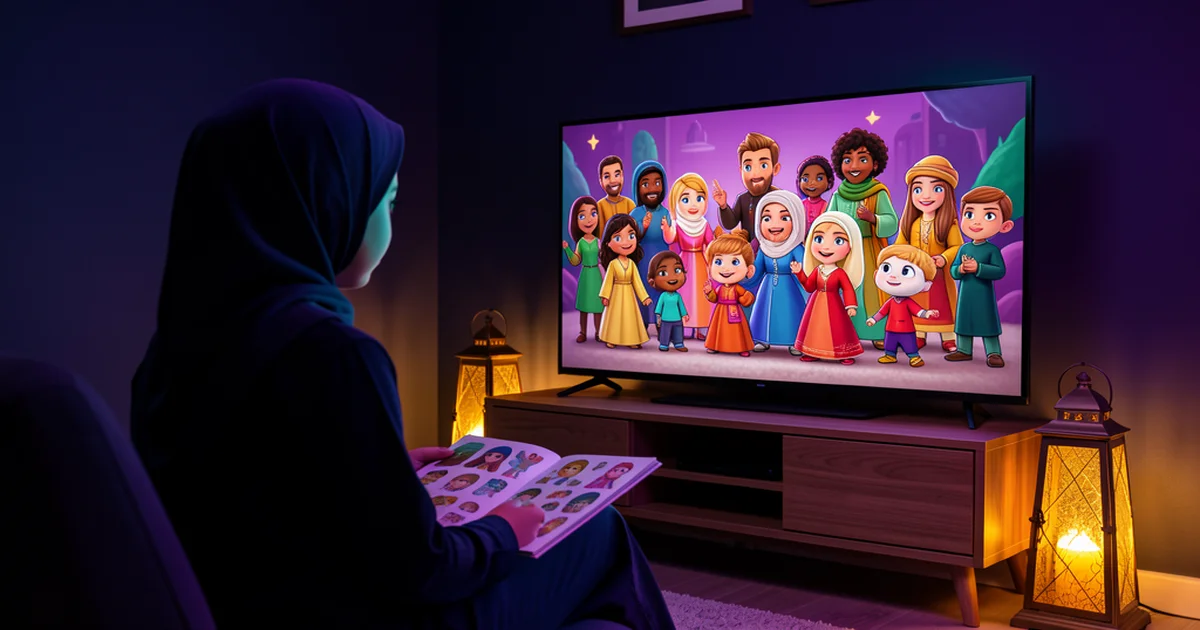
And somewhere in Texas, an 8-year-old girl is still coloring in princesses who don't look anything like her.
That's not a hypothetical. That's exactly why Salam Lanterns exists.
A few months ago, my daughter Blair wanted to buy sticker books as Eid gifts for her friends at the masjid. Simple enough, right? Walk into any store, grab some sticker books, done. Except every single one she found featured characters in outfits she'd never wear. No hijabs. No modest clothing. Nothing that reflected the world she and her friends actually live in.
She came home frustrated. Catherine — my wife — heard the story and said the thing that started everything: "Let's make them ourselves."
So we did.
$433 billion, and nothing for the kids
Here's what's strange about the modest fashion boom. Nike makes performance hijabs. Dolce & Gabbana has an abaya collection. Major retailers are falling over themselves to court Muslim women with disposable income. And that's genuinely great — adult Muslim women finally have options they didn't have ten years ago.
But walk down the toy aisle. Search Etsy. Browse Amazon. Try to find anything designed for a 5-year-old Muslim girl that isn't just a doll in a generic "ethnic" costume or a coloring book with no Muslim characters at all.
It's almost completely empty.
The message this sends is loud, even if nobody's saying it out loud: Muslim girls don't get to see themselves in the things they play with. They can join the conversation later, once they're old enough to buy things with their own money. Until then, they get princesses in ball gowns and sticker books full of outfits they'd never wear.
That's backwards. A girl's sense of what's normal starts forming the moment she opens her first sticker book — not the moment she buys her first abaya.
The thing Blair actually found
Blair didn't just discover that hijabi sticker books don't exist. She discovered that nobody had even thought to make them.
She found plenty of sticker books. Unicorns, mermaids, fashion dolls, animals. The fashion sticker books were the closest — mix and match outfits for cartoon girls. But every outfit was sleeveless. Every dress was above the knee. The entire category assumes "girl" means one specific kind of girl.
That's what got to her. Not that the books were bad — they were fine if you happened to be the girl they were designed for. But she wasn't. And neither were any of her friends.
Catherine put it simply: "If we can't find it, we'll build it."
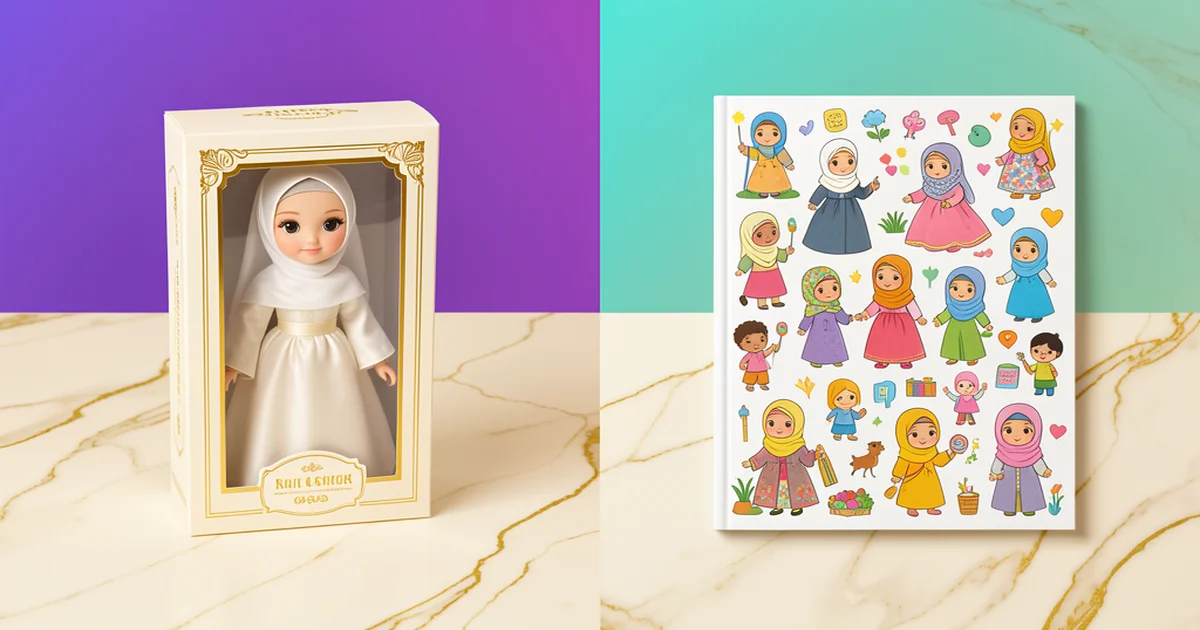
And that's how three sticker books and an app came to exist. Little Hijabi Adventures for the youngest (ages 3+, 50+ stickers), Beautiful Hijabi for face creation and dress-up (ages 5+), and Modest Hijabi Fashion for the older girls who are starting to develop their own style (ages 8+). Plus the Beautiful Hijabi App — 100+ stickers, create-your-own hijabi faces, $2.99 one-time with no ads and no subscriptions. Because Muslim parents have enough subscriptions.
Representation doesn't start at 18
This week I watched a viral Instagram reel from Fatimah Bazzi where she talked about the scariest part of raising a Muslim girl in 2026. It wasn't boys. It wasn't peer pressure. It was something subtler — the way the world quietly tells girls they don't quite fit, over and over, starting when they're small.
That's the thing about representation. You don't fix it with one big gesture when a girl turns 18. You fix it in the thousand tiny moments before that — the sticker books, the toys, the apps, the shows — where she either sees herself reflected or she learns to accept that she won't be.
The modest fashion industry figured this out for adult women. Runway shows, influencer campaigns, billion-dollar projections. They built an entire economy around the idea that Muslim women want to look good on their own terms.
Nobody's doing that work for the 3-to-12-year-olds yet.
And honestly? That's not a criticism of the industry. It's just a gap. A really big, really obvious gap that's been sitting there while everyone aimed their products at adults with wallets.
What we're actually building
Salam Lanterns isn't trying to be the next Nike hijab. We're three people — a dad, a daughter, and a family friend — who looked at a shelf full of sticker books and realized none of them were for us.
We're starting where Blair started: sticker books and an app. Things girls can play with, create with, see themselves in. The vision beyond that is bigger — more books, more apps, eventually a whole platform of modest media for Muslim kids. Games, shows, creative tools. A place where Muslim girls in the West don't have to settle for whatever's available.
But that's down the road. Right now, we've got three books and an app that make Muslim girls smile. That's enough for today.
Explore our books and bundles — every order helps fund our first print run so we can get these into more hands. The modest fashion industry is worth $433 billion. I'd argue the 8-year-old in Texas, opening a sticker book and finally seeing herself on the page, is worth just as much.