title: "Your Muslim Child Can Name Every Disney Princess. Can She Name Three Muslim Ones?" description: "Muslim kids see themselves everywhere except in the stories made for them. Here's why representation in children's books and toys still has a long way to go — and what we're doing about it." date: "2026-06-01" slug: "muslim-children-representation-sticker-books-hijabi" category: "Representation" tags:
- Muslim children representation
- hijabi sticker books
- Muslim girls toys
- Islamic books for kids
- representation matters image: "/blog/muslim-children-representation-sticker-books-hijabi-hero.webp"
A reel that stopped me mid-scroll
Last week I watched a reel from Noor Kids that asked a simple question: "Name 3 Muslim heroes." The answer from a room full of kids? Silence. Not one name.
Not Khadija. Not Bilal. Not Fatima al-Fihri, who founded the world's first university. These are figures who shaped civilizations, and a group of Muslim children couldn't name a single one.
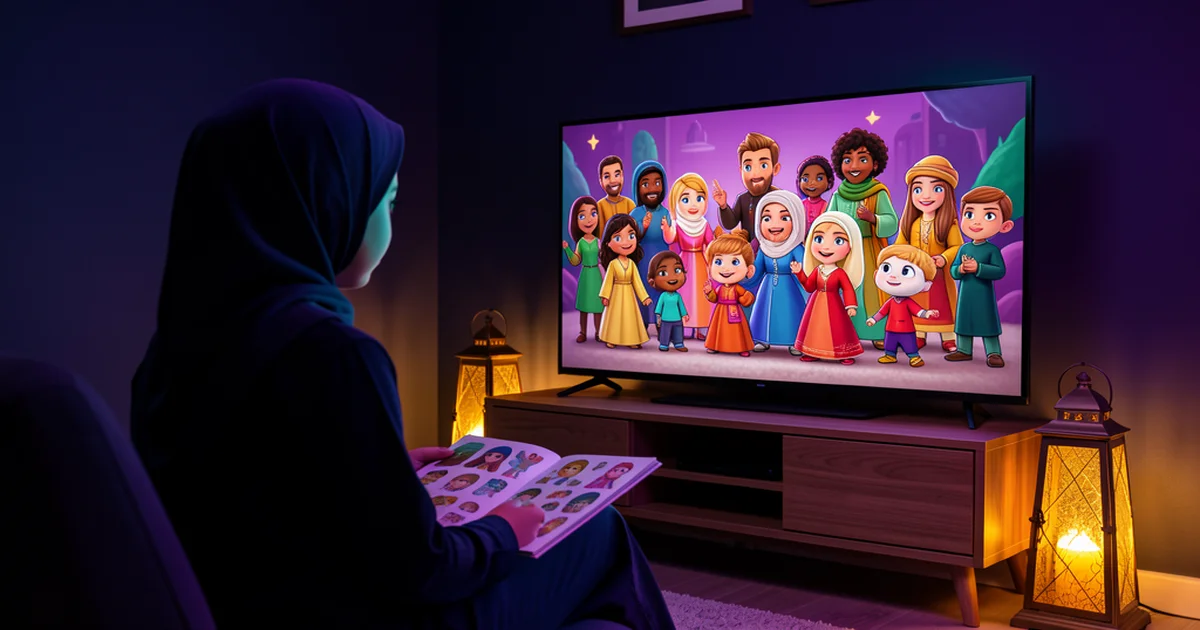
That video has been rattling around in my head since. Because it's not about memorization. It's about whether children grow up seeing their identity reflected in the culture they consume — in books, in toys, in the stories adults tell them. The answer, for most Muslim kids in the West, is no.
The numbers are bleak
A 2024 report from EdTrust found something that shouldn't surprise anyone but still stings: Muslims make up nearly a quarter of the global population — roughly 2 billion people — but account for about 1% of characters in children's literature published in English. One percent. For a quarter of humanity.
The MuslimMatters article "Beyond Representation: Reclaiming Spiritual Storytelling for Muslim Children" put it plainly earlier this year: we've spent years fighting just to get Muslim children to see themselves on the page — to recognize their names, their families, their skin tones, their dress. And that fight is far from over.
Compare that to what's happening in modest fashion for adults. The Economist reported this month that Muslim consumer spending on fashion will hit $428 billion by 2027. The Guardian ran a piece in June about modest fashion heading for mainstream despite political hostility. Al Jazeera covered modest fashion's "global turn" just last month. Paris had its first Modest Fashion Week. The runways, the magazines, the market data — all of it says: Muslim identity in fashion has arrived.
Now look at the toy aisle.
What my daughter found at the store
When Blair wanted to buy sticker books for her Muslim friends, she walked into a world that hadn't changed since I was a kid. Every sticker book featured characters with bare shoulders, mini skirts, uncovered hair. The "default" character in children's creative play is still a non-Muslim girl dressed in ways that don't reflect the homes Blair's friends come from.
She checked Etsy. She checked specialty shops online. She came home empty-handed.
Catherine looked at her and said, "Let's make them ourselves."
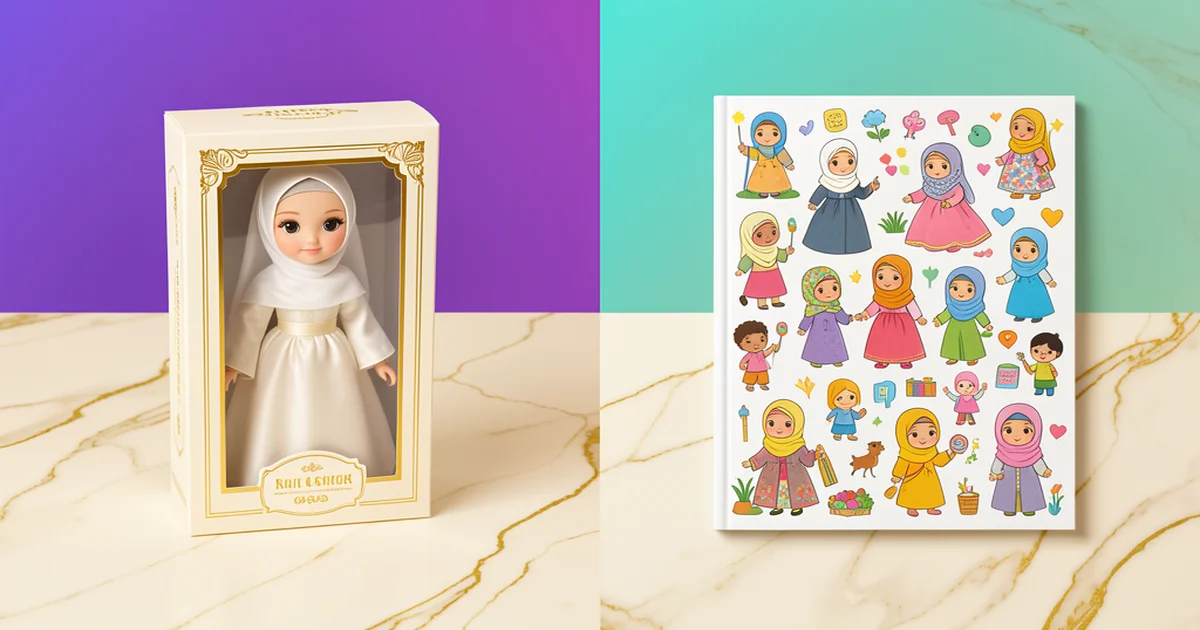
That's how Salam Lanterns started. Not from a business plan or a market analysis, but from a nine-year-old who couldn't find a single sticker book where the characters dressed like the people she loves. We built three sticker books — Little Hijabi Adventures for ages three and up, Beautiful Hijabi for ages five and up, and Modest Hijabi Fashion for ages eight and up — plus a mobile app where kids can create their own hijabi characters. Over 50 stickers per book. Modest fashion, hijabi characters, and zero compromise on fun.
Why sticker books matter more than you think
Sticker books seem small. They're not a blockbuster movie or a Netflix series. But here's what a sticker book does that a streaming show can't: it puts the child in charge.
When a kid places a hijabi sticker on a page — chooses the outfit, the expression, the scene — she's not just consuming representation. She's creating it. She's making a world where someone who looks like her is the main character, not the afterthought added for diversity points. That act of creation matters. Psychologists call it "self-authoring," and it's one of the strongest ways children build identity.
The MuslimMatters piece made a distinction I keep coming back to: representation is not just about showing Muslim kids on a page. It's about the kind of stories told. Are Muslim characters only in books about fasting or hijab or immigration? Or are they in books about adventures, friendship, creativity — the same universal themes every other kid gets to explore?
A sticker book is inherently universal. It's about playing, creating, and having fun. When the characters happen to be hijabi, the message isn't "here's a book about Islam." The message is "here's a book for you."
The gap is closing. Slowly.
I said the numbers are bleak, and they are. But things are moving. Muslim parents are building their own media companies — Noor Kids, Zaynab and Zak, the whole ecosystem of indie creators filling the gaps that publishers won't. Screen-free Islamic toys, Montessori-style learning tools, and — yes — sticker books and activity books are finding their audience.
A viral Instagram reel last month said it plainly: "Muslim kids, this is their time. Something we never had, but they do now."
I think that's right. Not because the problem is solved — it isn't — but because Muslim families are no longer waiting for someone else to solve it. They're building it themselves, one sticker book, one app, one story at a time.
If your daughter can't name three Muslim heroes, it's not because she doesn't want to learn. It's because she hasn't been given the chance. Check out our sticker books — they're made for exactly this. And if you want something digital to start with, the Beautiful Hijabi app lets kids create hijabi characters right on a phone or tablet. No ads, no subscriptions. Just play.
The next time someone asks your kid to name three Muslim heroes, I want her to have an answer. Not because she memorized a list. Because she grew up seeing herself in stories worth telling.