image: "/blog/muslim-girls-everywhere-except-toy-aisle-hero.webp" title: "Muslim Girls Are Breaking Through Everywhere — Except the Toy Aisle" description: "From NYC's first Muslim mayor to Paris Modest Fashion Week, Muslim representation is surging in 2026. So why can't a 7-year-old still find a sticker book with someone who looks like her?" date: "2026-05-29" slug: "muslim-girls-everywhere-except-toy-aisle" category: "Representation" tags:
- Muslim girls representation
- hijabi sticker books
- Muslim representation 2026
- islamic toys
- modest fashion
Something shifted this year. You can feel it if you're paying attention.
Zohran Mamdani is about to become New York City's first Muslim mayor. Over in England, more than 450 Muslim councillors got elected in local polls last month. Paris Modest Fashion Week ran its spring-summer shows for a third year. The modest fashion industry is projected to hit $433 billion by 2028. Dr. Sabrya Carim just won recognition for her work getting Muslim women into STEM, saying the award is "for the girls who are still trying to see what's possible for themselves."
Muslim people are showing up in rooms they weren't in before. That sentence felt different even writing it five years ago. Now it just reads like a news roundup.
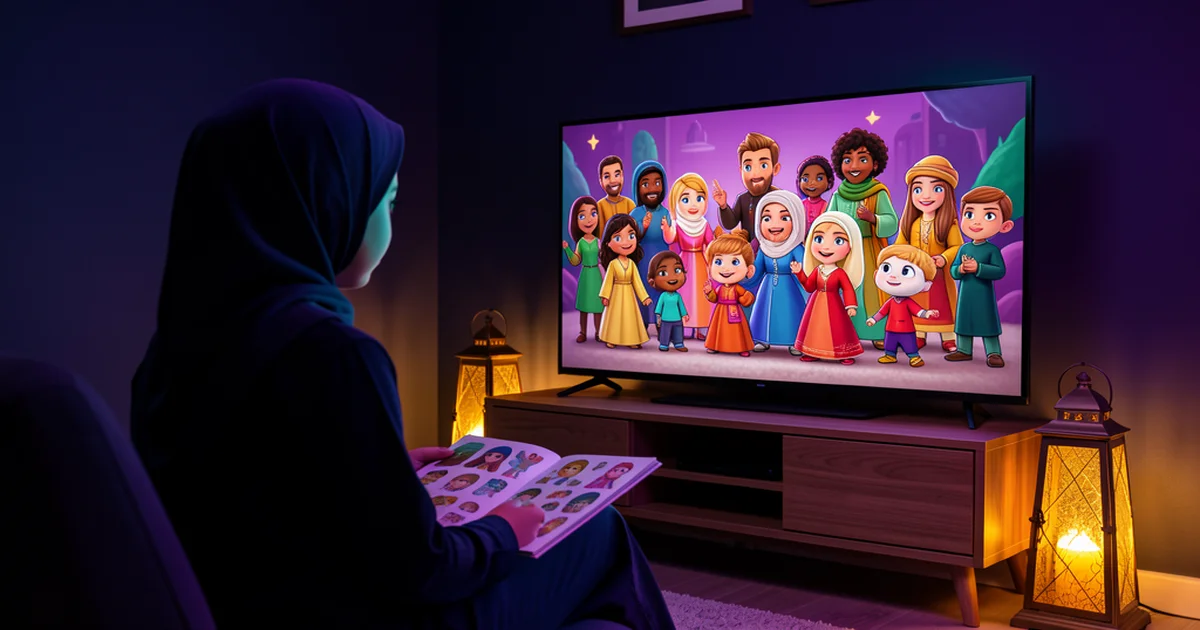
But my daughter Blair noticed something last month that doesn't show up in any of those headlines. She was at a birthday party for one of her friends from the masjid — the kind where a dozen girls sit in a circle, doing crafts, passing around snacks, being kids. The birthday girl's mom had set out a pile of sticker books as an activity. Fashion stickers, face stickers, outfit mix-and-match. The girls loved them.
Blair did too, for about two minutes. Then she leaned over and whispered to me: "None of these girls wear hijab."
Not as a complaint, really. More like an observation that she'd made enough times by now that it barely registered as frustration. Just a fact of the world she lives in.
The gap between the headlines and the toy shelf
Here's what gets me. The same week Blair was at that birthday party, I was scrolling through TikTok and came across a video from a creator talking about empowering young Muslim girls through representation. 550-plus views, dozens of comments from parents saying the same thing in different words: "I want my daughter to see herself."
MPAC's Hollywood Bureau put out a call that same week asking parents of 7th through 12th graders to get involved in changing the narrative for Muslims in media. The Muslim News Awards for Excellence just announced its 2026 shortlist. A new academic study came out about Muslim girls' identity formation in European schools.
The conversation about Muslim girls and representation has never been louder. Parents are organizing. Researchers are studying. Award committees are recognizing.
And the toy aisle hasn't moved an inch.
I don't mean that metaphorically. I mean if you walk into a Target or a Barnes & Noble today and look for a sticker book, a coloring book, or any kind of creative activity where a Muslim girl aged 3 to 12 can see a character wearing hijab — dressed modestly, living a normal life, doing normal things — you're going to walk out empty-handed.
The modest fashion industry figured this out for adult women. Nike launched a performance hijab. Dolce & Gabbana made abayas. Brands with real budgets saw a market and built products for it. Nobody waited for permission. They just saw Muslim women spending money on clothes and thought, "Maybe we should make clothes they'd actually want to wear."
But nobody looked at a 6-year-old Muslim girl and thought the same thing.
What Blair found when she went looking
If you've read anything else on this blog, you know the story. Blair wanted to buy sticker books as Eid gifts for her friends. She searched Etsy. She checked every online store she could find. Every sticker book had characters in sleeveless tops, short skirts, uncovered hair. Not one — not a single one — had a hijabi girl doing anything.
She wasn't looking for something preachy. She wasn't looking for an "educational Islamic product" with Quranic verses on every page. She wanted the normal thing every other kid gets: a fun sticker book with characters who look like her and her friends.
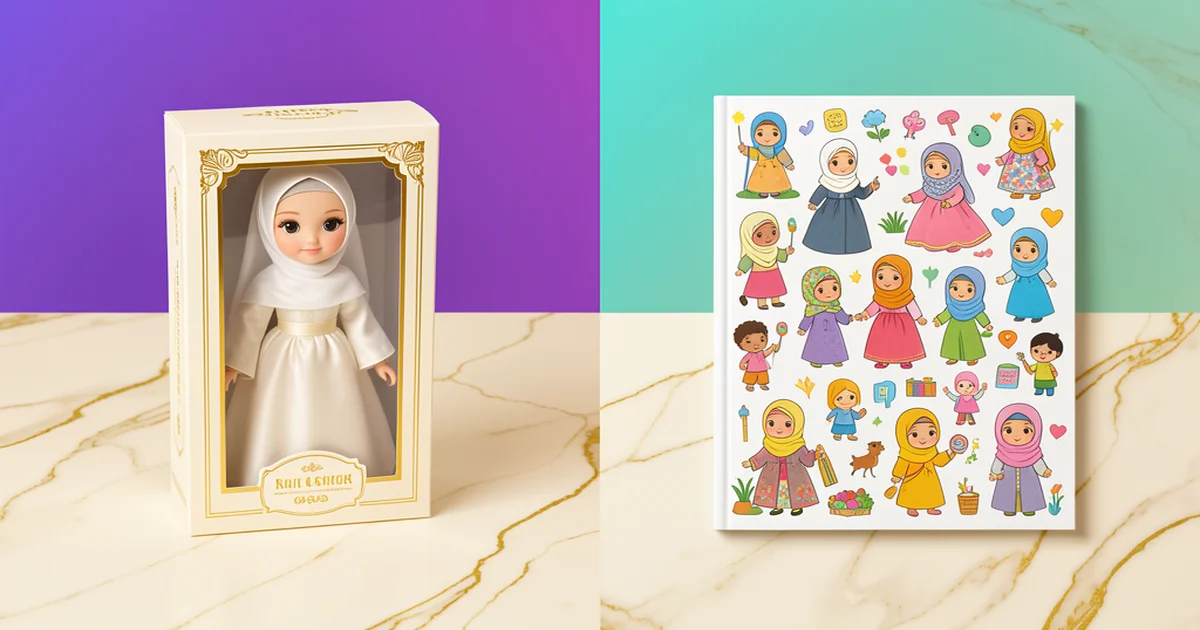
Catherine heard about it and said, "Let's make them ourselves." Which is how Little Hijabi Adventures (ages 3+, 50+ stickers), Beautiful Hijabi (ages 5+, face creation and dress-up), and Modest Hijabi Fashion (ages 8+, style and coordination) came to exist. Plus the Beautiful Hijabi App — 100+ stickers, create your own hijabi characters, $2.99 once, no ads, no subscriptions.
We didn't build these because we saw a market opportunity. We built them because a kid came home from the store and asked a question nobody should have to ask: "Where are the ones that look like us?"
Why this year feels different
I keep coming back to those 450 Muslim councillors in England. Not because local government has anything to do with sticker books, but because it represents something broader. Muslim communities in the West aren't asking for a seat at the table anymore. They're taking one. They're running for office, walking runways, filing patents, winning awards.
The girls growing up in those communities right now — the 5-year-olds, the 8-year-olds, the 12-year-olds — they're watching all of this happen. They're seeing Muslim adults exist in spaces that didn't have them before. And then they open a sticker book and find nothing.
That disconnect is real. You can't tell a kid "you can be anything" and hand her a toy shelf where she literally isn't represented. The message doesn't land if the environment doesn't match the words.
A parent commented on that TikTok video I mentioned: "Representation matters, especially for young Muslim girls who are navigating their identities in a complex world." That's the kind of sentence that sounds generic until you've watched a 7-year-old stare at a sticker book full of girls who don't dress like her and quietly set it down.
Play isn't secondary to progress
There's a tendency, when talking about representation, to focus on the big things. Political office. Media visibility. Corporate leadership. Those matter enormously, and the progress this year has been genuine.
But play matters too. The stickers a girl peels and places at age 5 are building something in her head about what's normal, what's possible, what belongs to her. It's not a substitute for seeing Muslim women in leadership. It's the foundation that makes that leadership feel reachable in the first place.
If you're a parent looking for screen-free activities for your Muslim daughter — something that isn't just another Arabic alphabet worksheet, something that lets her create and imagine without a lesson plan attached — our sticker books were made for exactly that. Three books for different ages, each one built around the idea that Muslim girls deserve to see themselves in the same joyful, creative play every other kid gets.
The modest fashion world is having its moment. Muslim political representation is breaking through. Muslim girls are winning science awards and building community programs and seeing themselves in ways previous generations couldn't.
The toy aisle just needs to catch up. Until it does, we'll keep making the books ourselves.