image: "/blog/muslim-girls-hijabi-dolls-sticker-books-gap-hero.webp" title: "Muslim Girls Can Finally Find Hijabi Dolls — But Sticker Books? That's a Different Story" description: "The Muslim toy market is booming with hijabi dolls and award-winning books, but one category got left behind. Here's why sticker books matter for our girls." date: "2026-05-28" slug: "muslim-girls-hijabi-dolls-sticker-books-gap" category: "Representation" tags:
- muslim girls representation
- hijabi dolls
- sticker books for Muslim girls
- hijabi sticker books
- Islamic toys
- modest fashion for kids
Something shifted this year and I can't stop thinking about it.
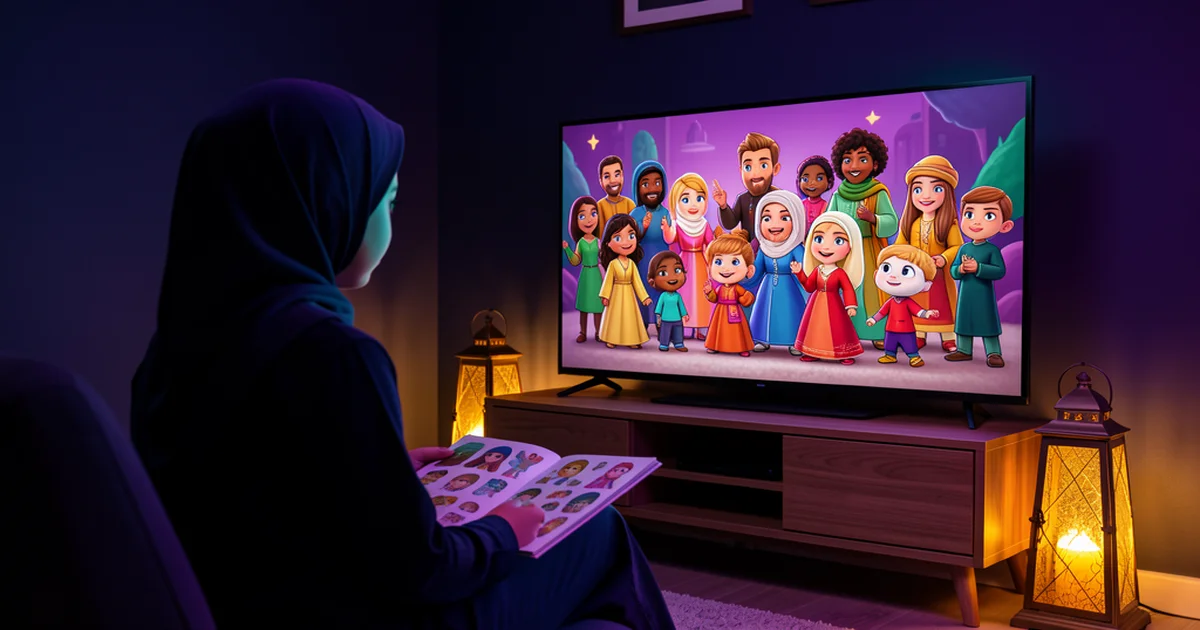
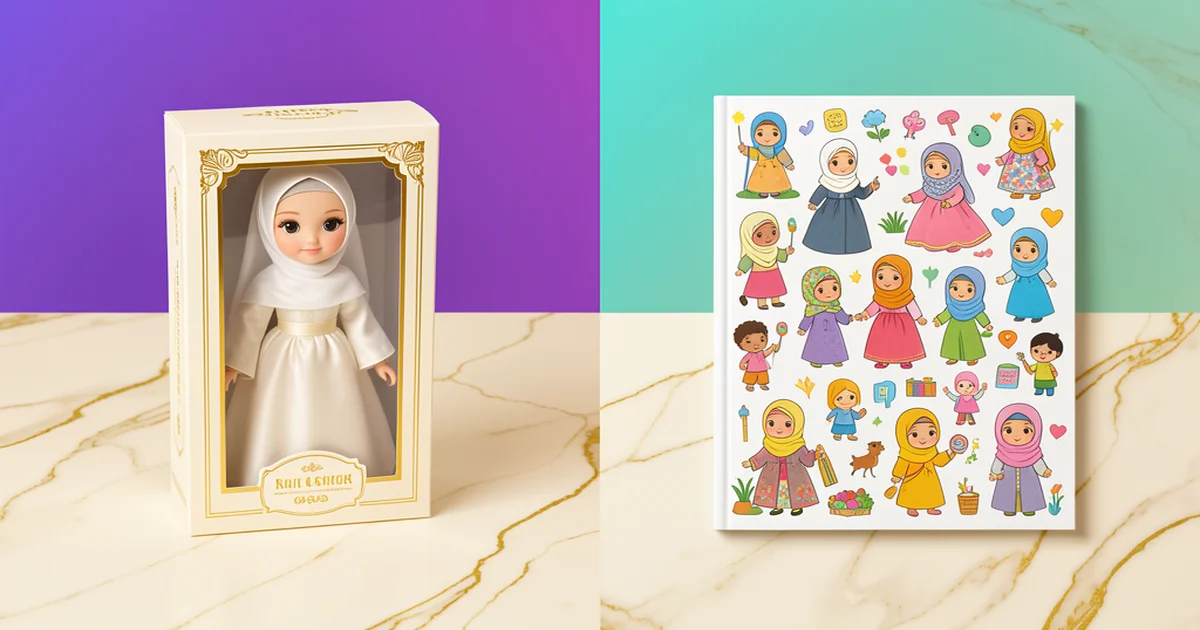
Scroll through Muslim parenting Instagram right now and you'll see something that would've been unthinkable even three years ago: hijabi dolls everywhere. Belle Dolls released Fatima, the first curvy hijabi doll, and the launch video blew past 30,000 views on TikTok in days. Imaan Kidz, Muzzy, Little Hijbays, Muslim Memories — there are now at least eight brands making dolls our girls can actually see themselves in.
Muslim children's books are having their moment too. Until You Find the Sun just won Best Picture Book at the Diverse Book Awards. Mommy's Khimar has become a storytime staple. Jamilah Thompkins-Bigelow's work keeps showing up on recommended reading lists far outside Muslim circles.
And then there's the modest fashion industry — which sounds like a separate conversation but isn't. Paris just hosted its 11th Modest Fashion Week. Al Jazeera ran a major feature on how the market is heading toward $433 billion by 2028. Influencers brought their daughters to the runway shows. Little girls watching their moms see themselves reflected in high fashion for the first time.
All of this momentum. All of this representation finally arriving. And yet.
The gap nobody talks about
My daughter Blair wanted to buy sticker books as gifts for her Muslim friends at the masjid. She went looking for something simple — characters in hijab, modest outfits, the kind of thing you'd find in any sticker book but with girls who looked like her friends.
She couldn't find one.
Not on Etsy. Not on Amazon. Not in any of the online stores that were starting to carry hijabi dolls and Muslim children's books. Catherine searched with her. They spent hours. The sticker book section, it turns out, was the one corner of the Muslim toy market that nobody had gotten to yet.
If you've ever watched a kid with a sticker book, you know it's not a small thing. Sticker books are where children play out stories. They arrange characters, build scenes, create little worlds. It's where imagination gets physical. And when every character in that world is uncovered, immodest, completely disconnected from how you and your family live — that sends a message. Not a dramatic one. A quiet one. The kind you absorb without knowing it.
Why dolls and books aren't enough
I want to be clear about something: the hijabi doll explosion is genuinely wonderful. The fact that a Muslim mother can now choose between eight different brands instead of zero is progress that matters. Same with the books. Every picture book that centers a hijabi character without making hijab the entire plot — that's real.
But play isn't just one thing. Kids don't just read and cuddle dolls. They also stick things on things. They make faces and outfits and scenes. They carry sticker books to restaurants, to the car, to their friend's house. It's a different kind of play — more creative, more open-ended, more theirs.
When that whole category of play doesn't include them, the message they get isn't "you're not represented." It's quieter than that. It's more like... "this part of the world wasn't built with you in mind."
Catherine said it best when she and Blair came up empty: "Let's make them ourselves."
What we built
That's exactly what we did. Three sticker books, each made for a different age and interest:
Little Hijabi Adventures — ages 3 and up, 50+ stickers, the one Blair originally wanted to give as gifts. Bright, playful, characters going about their day in hijab like it's the most normal thing in the world. Because it is.
Beautiful Hijabi — ages 5 and up. This one's about face creation. Kids mix and match features to build characters that look like them, like their moms, like their friends. My favorite part is watching a girl create a face that looks like her auntie and then laugh about it.
Modest Hijabi Fashion — ages 8 and up, the one for kids who are starting to pay attention to style. Modest fashion sticker outfits. Not "fashion but make it modest." Just... fashion. Because that's what it is.
And the Beautiful Hijabi app — $2.99, no ads, no subscriptions, just 100+ digital stickers where kids can create hijabi faces, save them, and share them. Because not all play happens on paper anymore.
The bigger picture
Here's what I keep coming back to: representation isn't a single product. It's not a checkbox. It's making sure that every way a child plays — every corner of their imagination — has room for them in it.
The hijabi doll brands figured out dolls. The book publishers figured out picture books. The modest fashion industry is figuring out clothing for every age. Paris Fashion Week is figuring out the runway.
Sticker books are our corner. That's the piece we're building.
And honestly? Blair's friends at the masjid loved their gifts. That's the part that matters most.
If you've been looking for sticker books with hijabi characters and coming up empty — we made them for you. You can also check out all three books and our bundles if you're shopping for more than one.