image: "/blog/muslim-kids-eid-sticker-books-representation-hero.webp" title: "Muslim Kids Showed Up for Eid. Their Sticker Books Didn't." description: "This Eid, Muslim children in the Bronx went viral for something beautiful. Then they went home and opened a sticker book with nobody who looked like them." date: "2026-06-02" slug: "muslim-kids-eid-sticker-books-representation" category: "Representation" tags:
- Muslim kids representation
- Eid sticker books
- hijabi sticker books
- muslim childrens toys
- representation gap
Did you see the video from the Bronx last week?
A group of Muslim kids — maybe eight or ten of them, dressed in their Eid best — were praying alongside Zohran Mamdani during Eid al-Adha. The NBC New York clip blew up. Nearly 400,000 views on TikTok. Parents in the comments section posting things like "my daughter keeps watching this on repeat" and "finally, kids who look like mine on my feed."
It was one of those moments where you just feel something shift. Muslim children, in a major American city, celebrated openly, visibly, proudly. No apology. No explanation. Just kids being kids on one of the biggest days of their year, and the whole country stopping to watch.
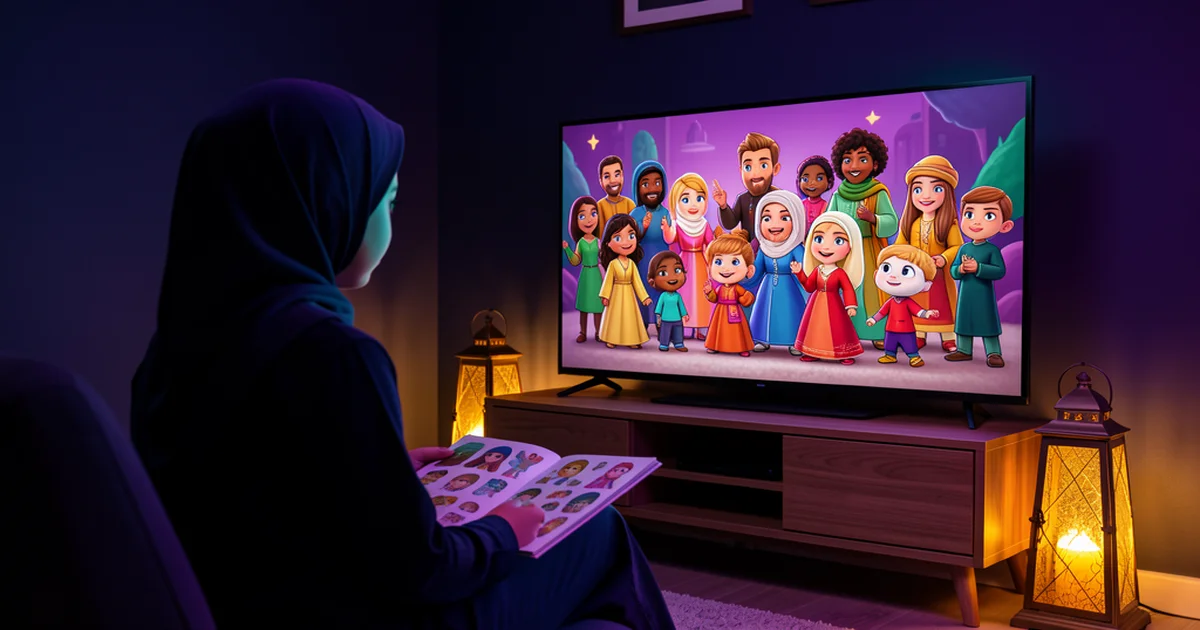
I showed the clip to Blair. She watched it twice, smiled, and then went back to the sticker book she was working on. One of ours, obviously — the Beautiful Hijabi face creation book. She'd spent about fifteen minutes mixing hijab styles and outfit combinations before I interrupted her.
She didn't think the video was remarkable. And maybe that's the point. She's ten. She's grown up with a mom who made sticker books because the store didn't have any. To her, seeing Muslims represented isn't a viral moment. It's just what she expects.
What Noor Kids said three days later
A few days after that Bronx clip made its rounds, Noor Kids posted a reel with a simple challenge: "Name three Muslim heroes. Most kids today would be speechless."
Not Muslim historical figures. Not the companions. Three Muslims — from any era, any field — who your child could name without googling. Most parents in the comments admitted their kids couldn't do it. A few said they couldn't do it themselves.
That post got under my skin. Not because Noor Kids is wrong — they're not — but because the problem goes deeper than heroes. It goes down to the stuff kids interact with every single day. The books on their shelf. The stickers they peel. The games they open on the iPad. The characters they dress up and imagine stories for.
You can't admire what you haven't been exposed to. That's not a controversial statement. It's just how kids work. A 6-year-old who has never seen a hijabi character in any of her books, games, or activities doesn't lack role models because the role models don't exist. She lacks them because nobody put them where she could find them.
The toy shelf is still pretending Muslim kids don't exist
I know I sound like a broken record on this. But the gap between what's happening in culture and what's happening in children's products has become absurd.
Paris Modest Fashion Week literally happened this week. Nearly 30 designers showed collections with hijabs, abayas, and modest silhouettes. Hicran Önal's Miha Turkey collection features floral tulle headpieces that would make incredible sticker art. The modest fashion industry is closing in on a half-trillion dollars.
And walk into any store right now and try to find a sticker book for a Muslim girl. I'll wait.
The Islamic toy market is growing — Deenhaus has Islamic building blocks. Lala + Mo makes masjid bead mazes. Omar & Hana singing dolls are a thing. Maryam's Market stocks shelves with faith-inspired activity products. Parents are clearly buying this stuff. The demand isn't theoretical. It's showing up in engagement metrics and sales numbers.
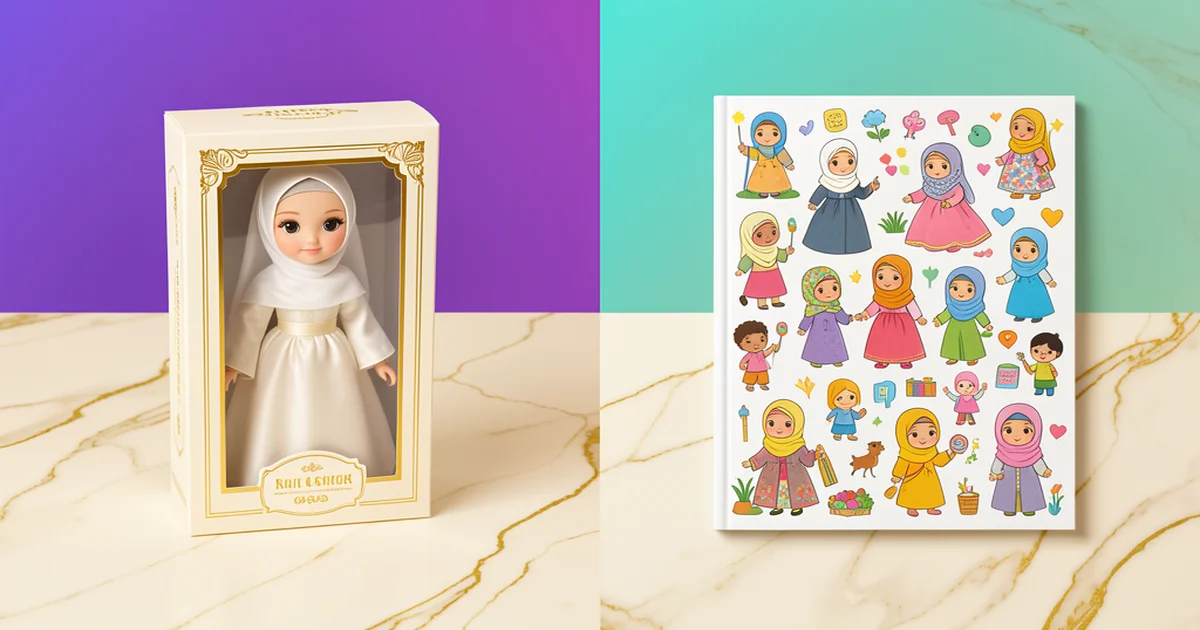
But sticker books? Hijabi characters? A mobile app where a Muslim girl can create herself? That part of the market is still mostly empty. We built three sticker books and an app because we couldn't find anyone else doing it. Blair wanted to buy Eid gifts for her friends. She went on Etsy, she checked every online store she could find. Nothing. Not one book with a hijabi girl doing normal things — playing, going to school, picking out outfits.
Catherine said, "Let's make them ourselves." That sentence turned into Little Hijabi Adventures (ages 3+, 50+ stickers), Beautiful Hijabi (ages 5+, face stickers), Modest Hijabi Fashion (ages 8+, $25, full outfits and styling), and the Beautiful Hijabi App — $2.99 once, no ads, no subscriptions, a hundred stickers and counting.
What parents are saying this week
Fatimah Bazzi posted something last week that I keep thinking about. She talked about the scariest part of raising a Muslim girl in 2026 — and it wasn't the things most people assume. It was about the internet, the influences, the constant noise telling Muslim girls who they should be. "Navigating family, deen, community, and the internet," she called it.
Another creator, Yazmeen Kanji, pushed back on the whole idea of "positive representation." She asked whether we're even asking the right question — whether representation by itself, without substance behind it, actually helps Muslim girls or just makes the rest of us feel better.
These are real conversations happening right now. Not think-piece conversations. Parent-to-parent, in Instagram comments and TikTok replies, the kind of thing that gets shared in masjid WhatsApp groups.
The Majid Khan Podcast did a whole episode on how hijabi representation in media shapes confidence and ambition for young girls. The argument was straightforward: when girls see women who look like them — in sports, in politics, in creative fields — they start to picture those futures for themselves. The sticker books and apps aren't separate from that pipeline. They're the earliest part of it.
Play is where identity starts
A sticker book seems small. I get that. In a world where Muslim kids are going viral for praying on Eid, where modest fashion is showing at Paris Fashion Week, where Noor Kids is challenging parents to name heroes — a sticker book can feel like a footnote.
But Blair doesn't spend her time reading about modest fashion weeks or watching mayoral coverage. She spends her time playing. That's where her world is built. The characters she creates in our app, the outfits she mixes in the fashion book, the faces she designs — those are the stories she's telling herself about who she is and what belongs to her.
If you're looking for something for your daughter this Eid — something that isn't another Arabic worksheet, something that lets her create and play without a lesson plan — check out the books. Three different ages, three different kinds of fun. Bundles if you want all three. The app is free with the bundle, and it's $2.99 on its own if you just want to start there.
The Bronx kids showed up for Eid and the whole country noticed. The question is whether we're going to show up for them the other 364 days of the year — in the books they read, the stickers they play with, the apps they open.
We're trying. But we shouldn't be the only ones.