image: "/blog/muslim-kids-first-animated-hero-toy-aisle-still-waiting-hero.webp" title: "Muslim Kids Got Their First Animated Hero — Now Fix the Toy Aisle" description: "A new animated film gave Muslim children heroes on screen. But when the credits roll and they walk into a toy store, they're still invisible." date: "2026-06-07" slug: "muslim-kids-first-animated-hero-toy-aisle-still-waiting" category: "Representation" tags:
- muslim kids representation
- childrens media
- hijabi sticker books
- muslim animated films
- toy aisle gap
- muslim girls
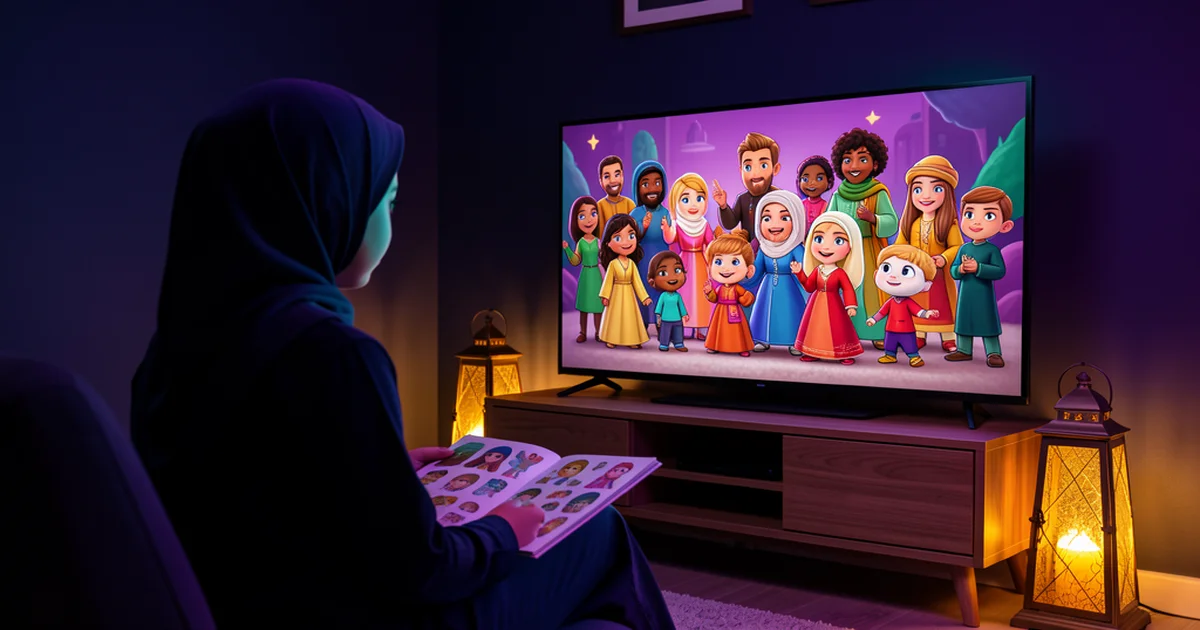
My daughter Blair came home from the masjid last week and told me her friend's mom was taking a group of kids to see Time Hoppers. It's an animated film — Muslim heroes, Muslim kids as the main characters, Muslim history woven into the story. I looked it up. Muslim children packed screenings across the country, cheering for characters who looked like them, spoke like them, carried their history.
That sentence shouldn't feel remarkable in 2026. It does.
The 1% Problem
There are nearly 2 billion Muslims in the world. According to EdTrust, Muslim characters show up in roughly 1% of children's literature published each year. One percent. For a faith that spans every continent, every skin tone, every language. My daughter's friends — Somali, Pakistani, Arab, Black, white, convert families like ours — all see themselves erased from the stories they grow up on.
Time Hoppers is a crack in that wall. But a crack isn't a door.
The film matters. Blair's friend came back from the theater talking about the characters for days. That's what happens when a kid sees themselves as the hero for the first time. They don't just watch. They carry it with them. But then the glow fades. They go to a birthday party and the sticker books on the table have princesses in ballgowns. They walk through Target and the toy aisle has every identity under the sun except theirs. The movie ends, and the world goes back to pretending they don't exist.
The Toy Aisle Didn't Get the Memo
This is the part that gets me. Representation is having a moment — and it's real. Paris hosted its first Modest Fashion Week this year. Thirty designers showed collections. Hijab walked the runway steps from the Champs-Élysées. The global modest fashion market is on track to hit $433 billion by 2028. Muslim parenting influencers are building audiences in the hundreds of thousands. A streaming platform called MuslimKids.tv is gaining traction because parents want safe, faith-aligned content.
All of that is good. But it's happening mostly above kids' eye level.
A 7-year-old doesn't read Al Jazeera think pieces about the $433 billion modest fashion market. She doesn't follow modest fashion week on Instagram. She notices what's on her desk, in her backpack, at her friend's house. She notices sticker books. Coloring pages. Dolls. The stuff she reaches for when she's bored on a Sunday afternoon or sitting in the backseat during a road trip.
That's where the 1% problem lives. Not on the big screen. Not on the runway. On the kitchen table.
What We Built Because We Had To
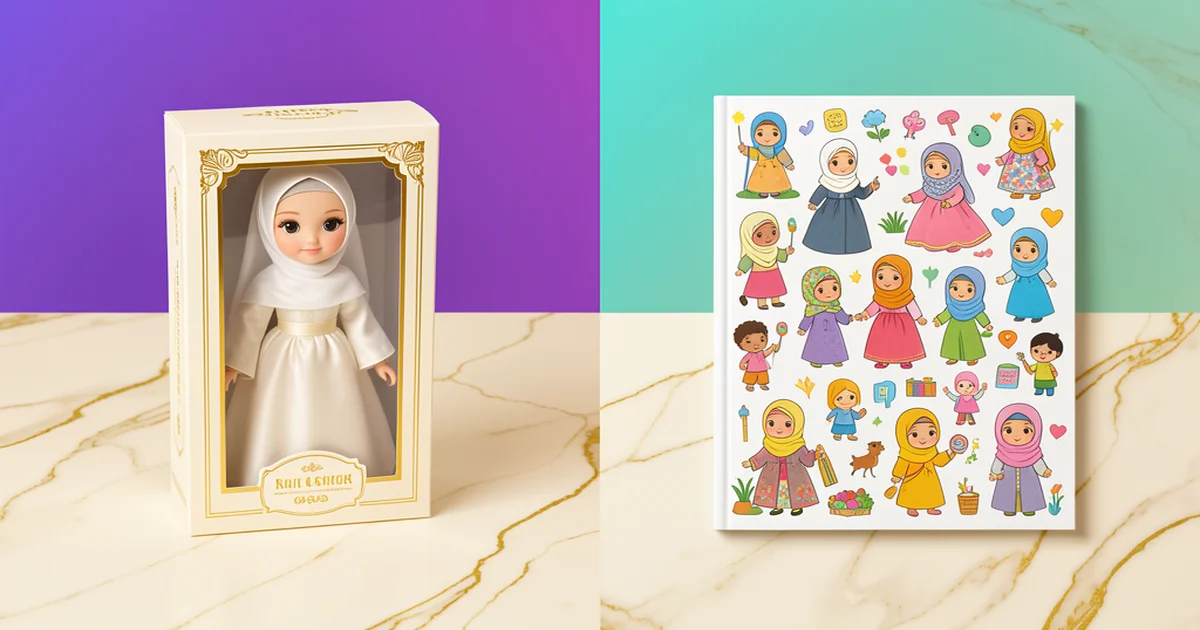
I've told this story before, but it hits different every time I think about it. Blair wanted to buy sticker books as gifts for her Muslim friends at the masjid. She searched Etsy, Amazon, every online store she could think of. Nothing. Not one sticker book with a hijabi character. Not one with modest fashion. Catherine — our partner and the person who actually said "let's make them ourselves" — helped Blair realize that if it didn't exist, we'd have to build it.
We made three books. Little Hijabi Adventures for the little ones, ages 3 and up, with 50+ stickers of Muslim kids doing everyday things — going to school, playing at the park, celebrating with family. Beautiful Hijabi, also for ages 5+, where kids create their own hijabi faces and scenes. And Modest Hijabi Fashion, for ages 8+, focused on the kind of modest fashion that girls actually want to wear — not a watered-down version of what's in the mainstream.
Then we built the Beautiful Hijabi app. Same idea, digital. A $2.99 one-time purchase, no ads, no subscriptions, no data harvesting. Just sticker fun on a phone or tablet. Parents who are already switching to MuslimKids.tv for streaming or Islamic coloring apps for Ramadan activities are the same families reaching for something like this — something made by Muslims, for Muslim kids, that doesn't talk down to them or treat their identity like a checkbox.
The Movie Is Great. Now What?
Time Hoppers proved that Muslim kids will show up when you make something for them. The audience was there. It was always there. The screenings were packed because families have been hungry for this, not for one season, not during one awareness month, but for years. Decades. Generations.
Blair's friend went to see the movie and came back wanting more. That's the real test. Not whether the movie was good — it was — but whether a kid who just saw herself on screen can find herself anywhere else when she gets home. Can she find a sticker book on her shelf? Can she open an app on her mom's phone and build a scene with a girl wearing hijab? Can she do the normal, low-key things that every other kid gets to do without thinking about it?
If the answer is no, then Time Hoppers is a milestone, not a movement. And Muslim kids deserve a movement.
That's what we're trying to build. One sticker book at a time, one app download at a time. It's small. The margins aren't great, small print runs mean higher costs, and we're a family operation — not a toy conglomerate. But I'd rather be the small thing that exists than the big thing that doesn't.
If your daughter saw Time Hoppers and came home looking for more, start here. Three books, an app, and a promise that we're just getting started.