image: "/blog/muslim-parents-building-their-own-kids-representation-hero.webp" title: "Muslim Parents Are Done Waiting. So They're Building Their Own Kids' Media." description: "The toy industry still hasn't figured out Muslim girls exist. So parents are making sticker books, apps, and games themselves. Here's what that looks like — and why it matters." date: "2026-06-01" slug: "muslim-parents-building-their-own-kids-representation" category: "Representation" tags:
- Muslim parents representation
- hijabi sticker books
- muslim girls
- Islamic toys
- Muslim kids media
A comment I can't stop thinking about
A few weeks ago, someone left a comment on one of our Instagram posts. A mom in Chicago said she'd spent her entire childhood never seeing a character in a book or toy that dressed like her. Now she has a six-year-old daughter. Same story. Different decade.
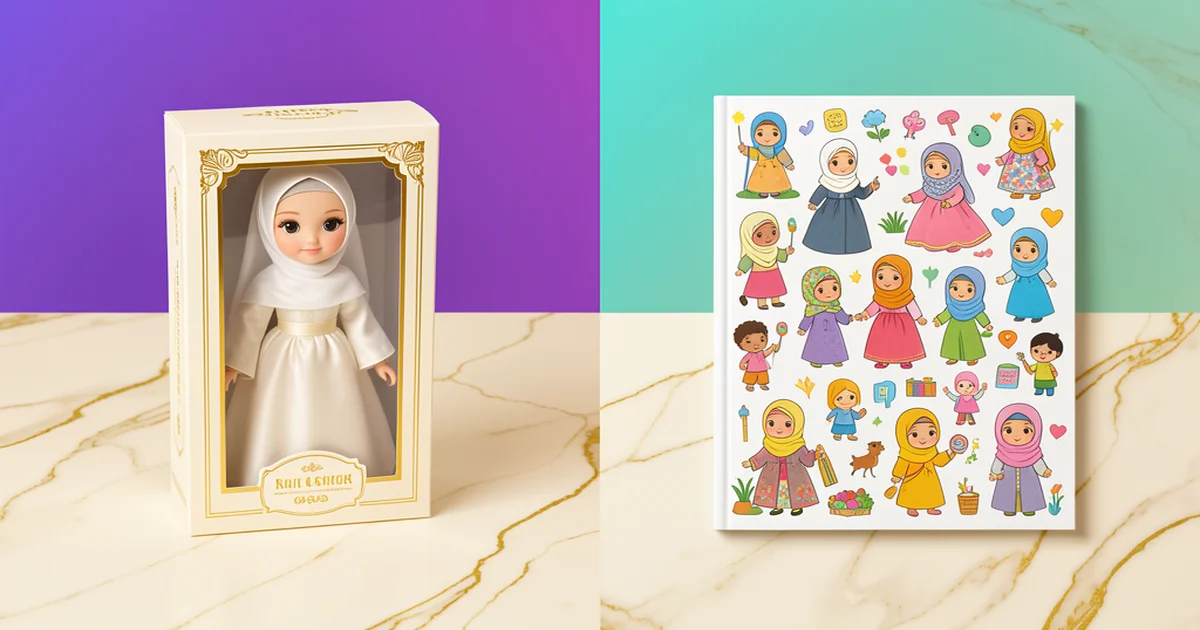
That stuck with me because it's the same thing my daughter Blair noticed when she went looking for sticker books for her friends at the masjid. She checked Target, Barnes & Noble, craft stores, Etsy. Nothing. Characters in crop tops and short skirts. Not a single hijabi girl in the bunch.
Blair's seven. She shouldn't have to notice that. But she did, because kids notice everything.
The industry still isn't getting it
Here's the thing about the toy industry and Muslim kids. The big companies know the market exists. The global Muslim consumer market is worth trillions. Modest fashion is projected to hit $433 billion by 2028. Nike makes hijabs. Major retailers stock abayas. The data is there.
But walk into a toy store and tell me what you find for a five-year-old Muslim girl. Not a prayer mat. Not Arabic flashcards. I mean something fun. Something she'd pick up off a shelf because it looks cool, not because her mom handed it to her for educational purposes.
The silence is loud.
I've talked to enough Muslim parents at this point to know that Blair's experience wasn't unique. It wasn't even unusual. It's the default. Muslim kids grow up surrounded by characters and toys that don't reflect them, and the industry treats that as normal.
The parent-creator wave
Something shifted in the last couple years. I see it in my feeds, in conversations with other Muslim parents, in the small businesses popping up on Instagram and at community bazaars.
Muslim parents stopped waiting.
A mom in Michigan started making hijabi coloring books because her daughter came home from school asking why none of the princesses wore scarves. A dad in London launched a board game where all the characters are Muslim kids going on adventures. A small studio in California is producing an animated series with hijabi characters — funded entirely through community support because no traditional studio would touch it.
These aren't big companies pivoting to a new demographic. These are parents who looked at the gap, realized nobody was coming to fill it, and decided to do it themselves. With their own money, their own time, their own late nights after the kids go to bed.
Catherine, Blair, and I are part of that wave. When Blair couldn't find sticker books for her friends, Catherine said "let's make them ourselves." She didn't say it as a motivational slogan. She meant it literally. Three weeks later we had prototypes.
What "building it yourself" actually looks like
I want to be honest about what this process is actually like, because the Instagram version of entrepreneurship makes it look easy. It's not.
Our first print run was small. Small enough that each book cost significantly more to produce than a mass-market sticker book from a major publisher. We priced Little Hijabi Adventures at $20 because that's what it costs to make a quality product when you're not ordering 50,000 units from a factory in Shenzhen.
The Beautiful Hijabi App was $2.99 from the start. No ads, no subscriptions, no in-app purchases. That decision cost us money. Ads would've been easy revenue. But the whole point of this project is giving Muslim girls a space that's theirs, and you don't do that by showing them ads for things they didn't ask for.
We set up bundle pricing — two books save $5, three books save $10 plus free app access — because we wanted families to be able to get all three without overthinking the math. The margins aren't great. But neither is telling a kid she can't see herself in her own toys.
Why this matters more than a product
The thing I keep coming back to is that first comment. The mom in Chicago who grew up without representation and is now watching her daughter grow up in the same gap.
That cycle is what we're trying to break. Not just by making a sticker book, but by making it normal for a Muslim girl to open something fun and see herself inside it. No disclaimer. No educational justification. Just a kid playing, and the character on the page dressing like she does.
Every Muslim parent who builds something for their kid is chipping away at that gap. The coloring book mom in Michigan. The board game dad in London. The animation studio in California. Us with our sticker books and app.
None of us are waiting for permission anymore.
If you're a parent reading this
You don't have to start a business. You don't have to design a product or learn to code. But if your kid has ever looked at a shelf and not found themselves there, they noticed. Even if they didn't say anything.
The best thing you can do is pay attention to what they're paying attention to. When Blair noticed the sticker books didn't have hijabis, she didn't organize a petition. She told me about it at dinner, almost as an afterthought. That's usually how it sounds.
If you want to see what Muslim-made representation looks like, check out our books. If you want to start making something yourself, do it. The gap is real, and nobody's going to fill it unless we do.
The next generation of Muslim girls is growing up right now. They deserve to see themselves in the things they play with — not someday, not when the industry gets around to it. Now.