title: "Why Your Daughter Needs a Hijabi Sticker Book (Even If You Never Had One)" description: "Muslim girls are finally seeing themselves in movies, dolls, and books. Here's why sticker books matter in this moment — and what happens when kids grow up invisible." date: "2026-06-06" slug: "why-your-daughter-needs-a-hijabi-sticker-book-now" category: "Representation" tags:
- muslim girls
- hijabi sticker books
- muslim representation
- islamic toys
- muslim kids media image: "/blog/why-your-daughter-needs-a-hijabi-sticker-book-now-hero.webp"
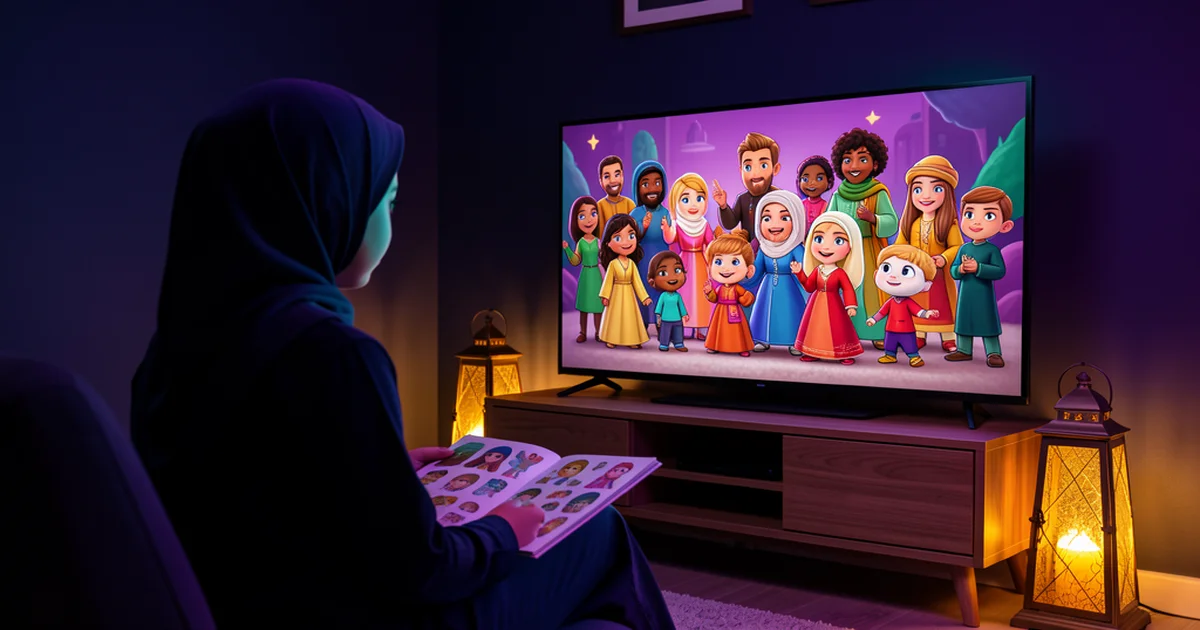
There's a movie called Time Hoppers making its way around the world right now. It's about Muslim kids going on adventures, seeing themselves on screen the way my daughter sees herself in the mirror every morning. The Guardian wrote about it. Parents are sharing clips like they've been waiting for this their whole lives — because they have.
Something is shifting.
A few weeks ago, The Economist reported that the Muslim modest-fashion market is heading toward $433 billion by 2028. Paris hosted its first international Modest Fashion Week. Hijabi dolls are popping up on toy shelves and Pinterest boards. Zaman Press just released a book called Muslim Heroines for Kids — because, as they put it, "our daughters deserve stories."
I didn't have this growing up
I didn't. And if you're reading this, you probably didn't either.
I remember being the only visibly Muslim girl in my school in third grade. I wore my hijab and felt proud of it — most days. But when we did art projects about "what you want to be when you grow up," the magazines we cut pictures from didn't have anyone who looked like me. No hijab. No modest dress. No brown skin that wasn't adjacent to some stereotype.
You learn to draw yourself. Literally. I drew a girl with a headscarf on every assignment because the reference material sure wasn't going to include one.
That's a small thing, and it's also not small at all. Kids internalize who belongs and who doesn't from the images around them. EdTrust found that Muslims make up nearly a quarter of the world's population but show up in barely 1% of children's literature. One percent. Let that sit for a second.
What happens when they see themselves
Blair came home from the masjid one afternoon and told me she wanted to buy sticker books as Eid gifts for her friends. She searched Etsy. She searched every online store she could think of. Everything she found — every single sticker book — featured characters without hijab, in outfits we'd never choose. The modest options didn't exist.
Catherine looked at Blair and said, "Let's make them ourselves."
That's how Salam Lanterns started. Not from a business plan or a market analysis. From a nine-year-old who wanted her friends to see themselves in something fun.
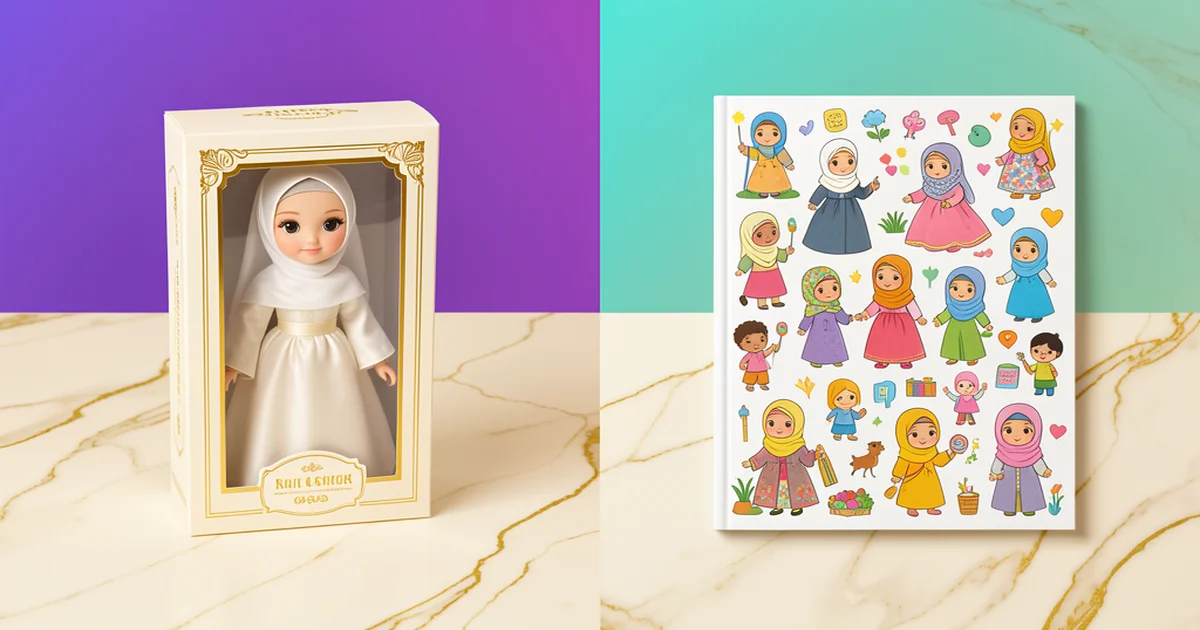
And here's what I've noticed since: when girls open Little Hijabi Adventures and see a character wearing a hijab riding a bicycle, or visiting a mosque, or just being a kid — they don't say "oh cool, a sticker book." They say something like, "She looks like me." Sometimes they say it quietly. Sometimes they show their mom with this expression I can't quite describe — a mix of surprise and relief.
That reaction is worth more than any sales figure.
The market is catching up, but gaps remain
Montessori-style Islamic toys are trending. Build-a-masjid block sets, interactive prayer mats, dolls with hijabs named Rahma and Madinah. Muslim Kids TV is producing original shows. Parents are sharing Islamic screen-free alternatives in Instagram reels that get thousands of saves within hours.
This is real momentum. But if you look closely, most of it targets younger kids — the under-5 crowd. The 6-to-10 range, where girls are forming their sense of identity and style, still has enormous gaps. That's exactly the age where Beautiful Hijabi and Modest Hijabi Fashion live. That's not a coincidence.
It's also the age where the questions get harder. "Why don't I see anyone like me in the shows my friends watch?" "Is my hijab weird?" You want them to have answers, and you want those answers to come from somewhere other than internalized doubt.
Sticker books are not trivial
I know what some people think. Sticker books are cute, lightweight, a stocking stuffer at best. But a sticker book is a kid's first experience with personal expression. They pick which character goes where. They create outfits. They build scenes that reflect their own life — a girl at the masjid, a girl at the park, a girl getting ice cream with her friends while wearing a hijab she chose herself.
That's not trivial. That's a child saying, "This is who I am, and it's normal."
The Beautiful Hijabi app takes the same idea further. Kids can create faces, mix and match hijab styles, and share with friends. No ads. No subscriptions. Just a space where being a hijabi girl is the default, not the exception.
What you can do right now
If you have a daughter, a niece, a student, a friend's kid — a girl in your life who's Muslim and growing up in the West — give her something that says she belongs here. Not through a lecture. Not through pressure. Through a sticker book she'll rip open and start using immediately.
Eid gifts, birthday gifts, just-because gifts. Grab a bundle — it's cheaper and you get the app free. The books are designed to work together. Little Hijabi Adventures for the younger ones, Modest Hijabi Fashion for the preteens who are starting to care about how they present themselves to the world.
The world is slowly starting to notice Muslim girls. Time Hoppers is on the big screen. Modest Fashion Week is in Paris. Representation is going from villain to visible, as one recent exhibition put it.
But your daughter doesn't need to wait for Hollywood to catch up. She needs something she can hold in her hands today, something that says: you're here, you matter, and your story is worth telling.